

Grace Sanders Johnson
So now here is the question: what tools, what methodologies, if you will, do we need to develop to coax memory back into work, to mute the seduction of forgetting and make re-memory irresistible? Of course I am thinking of the late Toni Cade Bambara here and her invitation to make revolution irresistible. How do we develop these multiple methods, pathways of sight, and seeing?
– M. Jacquie Alexander, “Groundings on Rasanblaj with M. Jacqui Alexander,” Caribbean Rasanblaj (2015)
Resist the urge to translate […] Play with its contours.
– Gina Athena Ulysse, “Introduction,” Caribbean Rasanblaj (2015)
Notes on coaxing memory:
Site: This side of the Atlantic. That side of the Atlantic. On/In the Atlantic. Proximity to the Pacific. Mountains.
Duration: 44 Days
Technologies: Word of mouth. Senses. Maps. Horse messengers. No phone, internet, or known people.
Orientation:The forest. Land, with a capital “L.” She is a living, breathing entity…That’s where we developed our sensibilities; how to read, how to read tracks, markings on the ground; how to develop respectful relationship with animals. That’s where we learned about plants. That’s how we knew what was “poisonous” and what was not “poisonous.” That’s how we developed the cure and the antidote. That’s how we came to know that it resided in the same place. – M. Jacquie Alexander, “Groundings on Rasanblaj with M. Jacqui Alexander” (2015)
Route/Course: “How to See a Flower”
• See a flower
• See yourself seeing the flower
• See how the flower sees you
• Look with the flower
- Pick a flower. (She is really picking you). Look at it for 10 seconds then turn away from her and draw it.
- Return to the same flower. (On this island, continent, or another). Draw another version of the flower while looking at it for 70 seconds. If you ask permission, and she agrees, you may touch her and smell her for a second or two.
- Observe your two drawings. Does any part stand out? Did you develop any new curiosity between your two drawings?
- Draw yourself through the senses of the flower. How does the flower see you? What is your relation?
- Repeat. With her or with others.
Practice Frequency:
Minimum = Every day. Maximum = They will let you know. Additional note: “You don’t pick and choose when you make a rasanblaj, you gather everything.” – Gina Athena Ulysse, “Introduction,” Caribbean Rasanblaj (2015)
Vocabulary:
wè/see/voir/hwε: The point here is about culling and crafting new vocabularies out of new practices. – M. J. Alexander (2015)gade/look/regarder/mεhyεn: The point here is about culling and crafting new vocabularies out of new practices. – M. J. Alexander (2015)
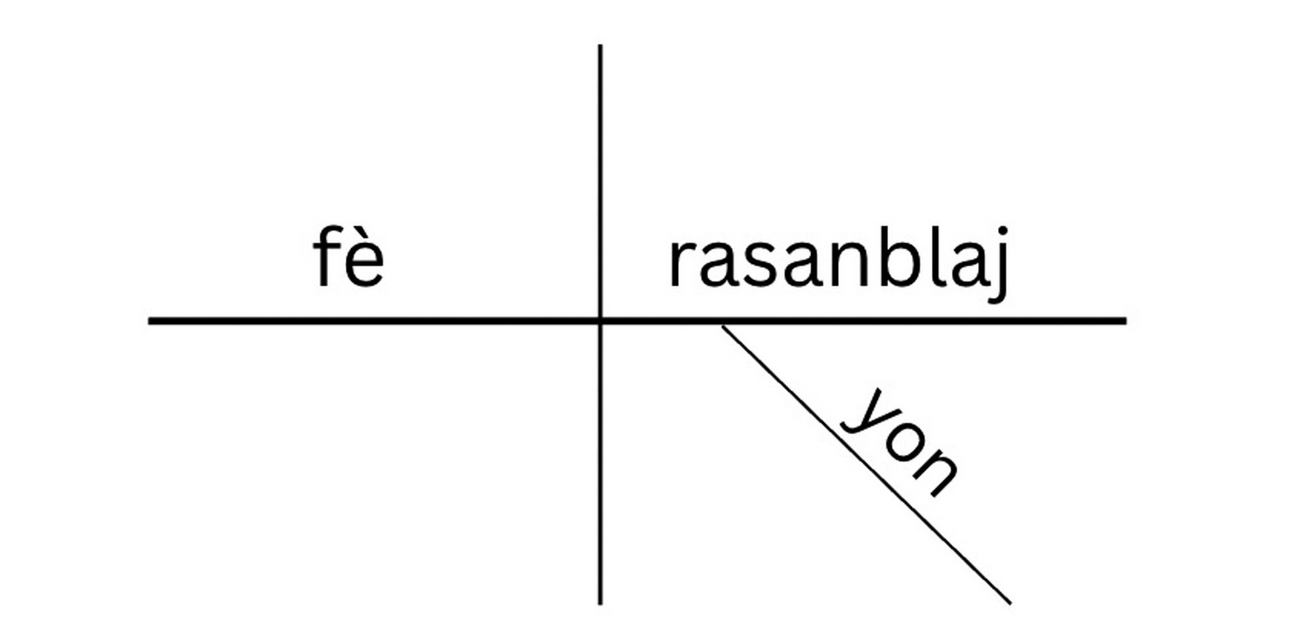
Figure 1. Culling a vocabulary
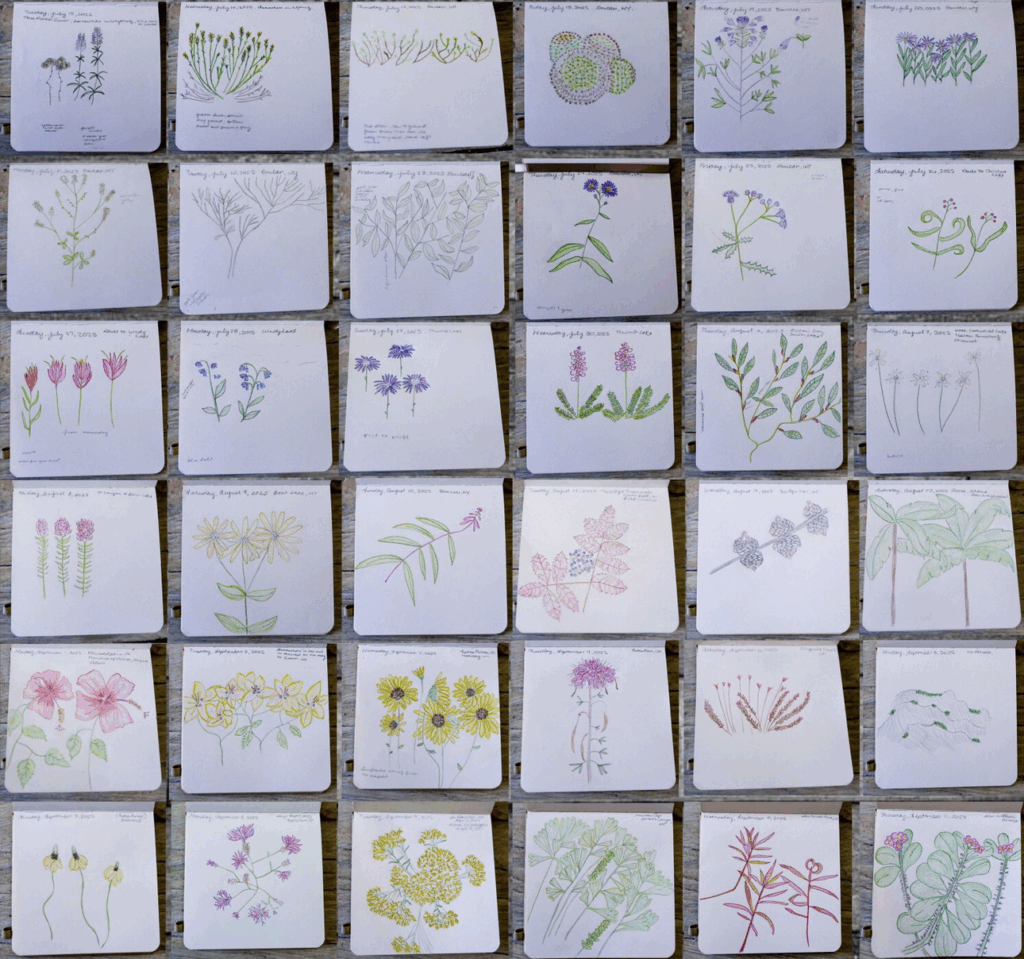
Figure 2. Mountain Time. See also “irresistible re-memory,” see also, “fè yon rasanblaj.” Look also around, look also down.
Day 4:
And there I was, clinging to the side of a canyon. Her 70-degree angle pressing against my cold cracking palms. This rock named Atlantic. My learning curve as steep and long as the soundwaves that must travel miles to reach her namesake’s floor. The incoming sonic tide drew us closer still. At her height the clouds are her companion. And thunder accompanies their elementary game of “Telephone.” Grandma is telling us to hangup because human technology is not Oya’s equal. It is her vessel. She is coming. My insides ripple like the cord between their elemental play. The vibrations and my feet slip from solid rock falling away with the tide. I instinctively leaned into the stone, praying that I would be absorbed by its sturdiness. Perhaps an ancestral practice of surrendering self to an Atlantic. We/I have clung to, fallen on, swam in this ocean. Leaning my head against her to catch my breath before the final climb to the top, I smell something. Something familiar, and yet foreign in this context. How could it be up here, where the oxygen molecules are limited and the water is ice? Using my hands to see and my nose to focus, I confirm. It is our savant friend. A small patch of mountain sage waiting for me like a pillow so that we can chat a bit. Keekee for a second. Laugh until our belly’s stitch and we release the deepest exhale, remembering that we are safe together. My fear was poisonous, in the way that it slows down your blood flow and stops your heart. She is my antidote. Artemesia. Sounds like a girl I knew in fifth grade. She sat next to Portia. Like Portia’s plaits, Artemesia has a double system of roots, leaves, and branches that allow her to thrive in many ecosystems. A fifth-grade memory extends through 100 years of the mountain sage’s lifetime. The sour taste of fear lingers with the tide of thunder and lightning teasing to touch my feet, but her smell is irresistible. So we all—me, the lightning, the thunder, the rock—stay awhile.
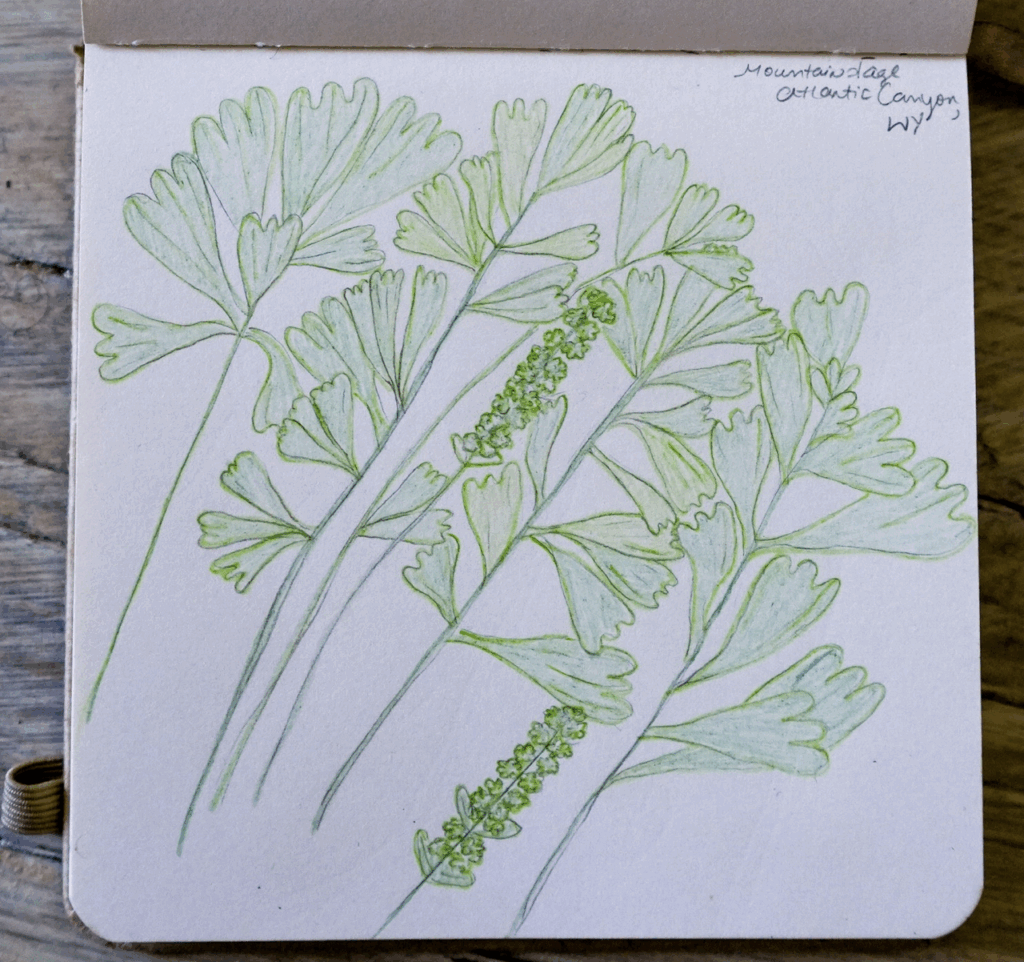
Figure 3. Artie. Short for Artemesia. Reminds me of Araminta. Minty. “Her most intimate natural allies seem to have been those sprung from the soil—weeds that defied order, hierarchical society, and trees that populated the forests where she walked, worked, and wended north. She may even have relied on landmark rocks to help her chart her course…” – Tiya Miles, Night Flyer, (2024).
Day 40:
Location: Ghana (Mountains)
I saw you back there somewhere…Eastern Caribbean, North Philadelphia, Out West…Africa & North America.
Figure 4. Crafting a vocabulary
Day 44:
Location: Memory (Southeastern Caribbean Sea)
Tired, hungry, limping a bit. The way through is up and down and up and down again.
Climb up.
Draw down.
Notes on contributor
Grace Sanders Johnson, Ph.D. is a multi-media artist, historian, international hike guide and wilderness medical first responder. She is the author of the award-winning book White Gloves, Black Nation: Women, Citizenship, and Political Wayfaring in Haiti (UNC Press, 2023).
References
Alexander, M. Jacquie. “Groundings on Rasanblaj with M. Jacqui Alexander,” Caribbean Rasanblaj (2015).
Miles, Tiya. Night Flyer: Harriet Tubman and the Faith Dreams of a Free People. Penguin Press, 2024.
Ulysse, Gina Athena. “Introduction,” Caribbean Rasanblaj (2015).
Contact Grace Sanders Johnson grace.sanders@gmail.com
© 2026 Taylor & Francis Group, LLC